How Playing Faster Can Increase Casino Losses
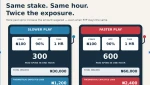
 Faster play increases total wagers, leading to higher theoretical expected losses even when the game's return to player remains unchanged.
Summary
An analysis by GamblingNerd.com explains that the speed of play in digital gambling products can significantly increase theoretical expected losses, even when the rules and payout percentage remain the same. Using a fictional player, Tunde, who stakes ₦100 per spin, the article shows that completing 600 spins in an hour instead of 300 doubles total wagers from ₦30,000 to ₦60,000. At a 96% RTP (4% house edge), the theoretical expected loss rises from ₦1,200 to ₦2,400. The same principle applies to live casino tables and game shows, where different formats create varying opportunities to place bets within a fixed time. The article notes that a game with a higher RTP (97%) but more spins (600) can still produce greater expected losses (₦1,800) than a lower RTP (96%) game with fewer spins (300, ₦1,200), because RTP applies per amount wagered, not per hour. The comparison assumes sufficient funds to complete all spins, and money returned from earlier bets can be re-wagered, meaning total wagers can far exceed the initial deposit. The calculations are illustrative, not predictions. For operators and suppliers, the distinction between cost per bet and exposure per hour is important, as shorter intervals between paid rounds create more wagering opportunities. However, not all customers will use every opportunity; delays, bonuses, and spending limits affect actual play. The UK Gambling Commission has treated game speed as a player-protection issue, citing evidence of reduced play intensity after 2021 measures that restricted spin speed and removed certain features.
(Source:Naijaonpoint.com.ng)